Load Shedding Stop-Gap Measure to Conserve Energy - MATIBINI

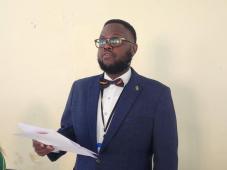
Speaker of the National Assembly, the Rt. Hon. Justice, Dr Patrick Matibini, SC, MP says several countries in the SADC region have had to resort to load-shedding as a stop-gap measure to conserve energy.  He said he was aware that low water levels at the Itezhi-tezhi reservoir and the Kariba Dam were affecting power generation, forcing the national power utility ZESCO to ration an average 200 megawatts of the total power generated daily.
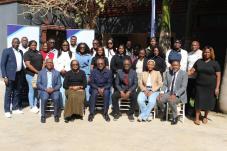
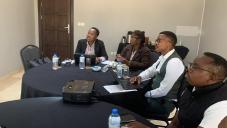
Dr Matibini said this during a presentation by Zambia Electricity Supply Corporation (ZESCO), on the power deficit that the country was currently experiencing which was held at the Parliament Buildings on Tuesday, 14th July, 2015.
The Honourable Mr Speaker said it was an established fact, that access to modern energy was a key driver to creating a dynamic economic environment as it fosters economic growth and social progress to reduce poverty.  “It improves productivity in agriculture, trade and commerce, thereby allowing a society to meet primary conditions for the development of entrepreneurship and job creation”, said Dr Matibini.
He said the presentation was very important for Members of Parliament as representatives of the people who together with their constituents were experiencing load shedding.  He advised the Members that as the link between the people and Government, it was their duty to present and interpret Government’s policies, decisions and views to the people in the most simplified manner possible, so as to keep your constituents well and fully informed on factors influencing the country’s social-economic development.  He said the presentation and exchange of views therefore, would go a long way in appraising them with the necessary information on the power deficit.
Also speaking at the presentation, Acting Managing Director of ZESCO Ltd. Mr Victor Mundende said the power deficit being experienced by the country was as a result of low water levels due to low rainfall experienced last season.
He said 2217 MHz of power was being generated by ZESCO countrywide, but that due to the low rainfall, power generation had been restricted by 560 MHz which has to be managed by load shedding.  Mr Mundende said unless the load management was put in place, the country would only have enough power to last until October.
He further said that the impact of the low generation of power had resulted in huge revenue losses for ZESCO and load shedding.