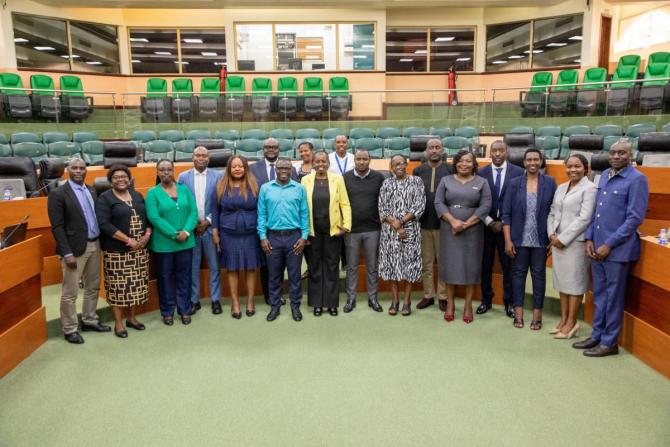
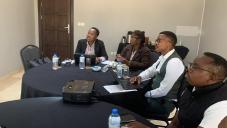
A delegation from the National Assembly of Zambia, led by Director of Legal Services Mrs. Doreen Chibomba - Mukwanka, successfully concluded a benchmarking study visit to the Parliament of Rwanda from 7th to 13th June 2026. The visit provided an important platform for knowledge exchange and institutional learning as Zambia continues to strengthen its parliamentary systems and governance structures.
The delegation was warmly welcomed by the Senate Clerk of the Parliament of Rwanda, Dr. Yvonne Umulisa, who expressed admiration for Zambia’s parliamentary system after learning that Cabinet Ministers in Zambia also serve as Members of Parliament. The exchange highlighted the unique features of both countries’ governance systems and set the tone for a productive week of discussions and learning.
In turn, the Zambian delegation was fascinated to learn about Rwanda’s parliamentary model, where Members of Parliament do not represent specific constituencies but serve the nation as a whole based on the country’s proportional representation system. The delegation also commended Rwanda’s commitment to gender inclusion, with Parliament comprising 63% women in the Chamber of Deputies and 43 % in the Senate. The delegation noted that the women’s agenda is not merely a policy objective but a reality reflected in leadership positions and decision-making processes.
Throughout the visit, the delegation participated in presentations and exchange sessions covering the structure and functioning of the Parliament of Rwanda, the role of standing committees, library and research services, legal and legislative processes, parliamentary automation and digitisation, financial management systems, and the use of technology in the recording, transcription, and dissemination of Hansard reports, culminating into plenary sitting during which the Minister of Finance presented the National Budget. The delegation also visited the Kigali Genocide Memorial and the Campaign Against Genocide Museum, gaining deeper insights into Rwanda’s history, resilience, and remarkable journey of national unity and transformation.
The benchmarking exercise was particularly significant in light of Zambia’s ongoing governance reforms following the enactment of the Constitution of Zambia (Amendment) Act, No. 13 of 2025, which introduced the Mixed Member Proportionalelectoral system. As Rwanda has successfully implemented a proportional representation system over the years, the visit provided a valuable opportunity to learn from Rwanda’s experiences, best practices, and lessons in promoting inclusive and effective representation.
Among the key lessons learnt were the importance of embracing digital transformation in parliamentary operations, strengthening research and information services to support evidence-based law-making and fostering governance systems that promote inclusivity, accountability, and citizen participation. The delegation also appreciated Rwanda’s integrated approach to parliamentary administration and its emphasis on efficiency and service delivery.
Speaking at the conclusion of the visit, Mrs. Doreen Mukwanka thanked Dr. Yvonne Umulisa and the Parliament of Rwanda for the warm hospitality extended to the delegation and for the openness with which they shared their experiences and best practices. She noted that the knowledge gained would contribute significantly to ongoing efforts to modernize parliamentary operations and support the successful implementation of Zambia’s constitutional and governance reforms.
The visit reaffirmed the strong bilateral relations between Zambia and Rwanda and underscored the importance of continued cooperation among parliamentary institutions. The delegation returned to Zambia inspired by Rwanda’s achievements and committed to applying the lessons learnt to further strengthen parliamentary democracy, institutional effectiveness, and inclusive governance in Zambia.