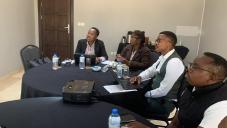
The Speaker of the National Assembly of Zambia, Rt Hon Dr Nelly B.K. Mutti, SC, MP, FAPRA, has commended the United Nations for its continued efforts to address the growing global threat of genocide, particularly as it relates to the spread of hate speech and misinformation.
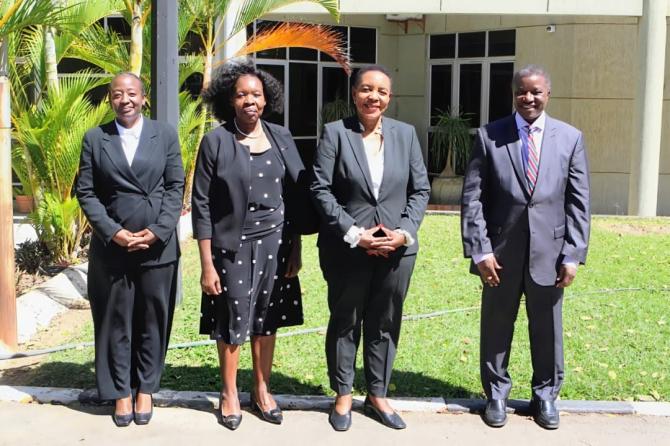
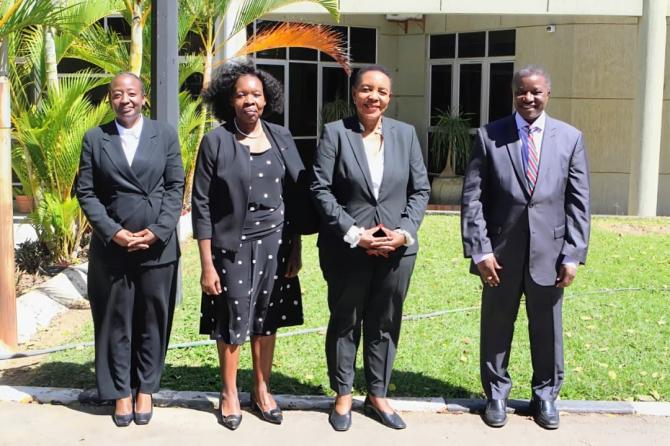
Speaker Mutti made these remarks during a courtesy call at her office by the United Nations Under-Secretary-General and Special Adviser on the Prevention of Genocide, Professor Chaloka Beyani, on Wednesday, 29th April 2026, at Parliament Buildings in Lusaka.
During the meeting, Speaker Mutti acknowledged the increasing risks posed by harmful narratives in both traditional and digital spaces. She emphasized that hate speech and misinformation have the potential to erode social cohesion, undermine democratic values, and, in extreme cases, contribute to violence and mass atrocities. She noted that proactive and coordinated interventions are essential to safeguard peace and national unity.
Professor Beyani, in his remarks, highlighted the urgent challenges presented by the digital age, where the rapid dissemination of false information can inflame tensions and deepen societal divisions. He explained that the ease with which misinformation spreads online has made communities more vulnerable, requiring stronger institutional responses and heightened public awareness.
He further outlined the United Nations Strategy and Plan of Action on Hate Speech as a key framework guiding global efforts to address this issue. The strategy promotes coordinated action among governments, civil society, and international partners to counter hate speech, while ensuring that fundamental rights such as freedom of expression are upheld.
In addition, Professor Beyani drew attention to the Framework of Analysis for Atrocity Crimes, describing it as an essential tool for early warning and prevention. He explained that the framework enables governments and institutions to identify risk factors and indicators associated with genocide and related crimes, thereby allowing for timely and targeted interventions.
Professor Beyani also underscored the critical role of Parliament and other democratic institutions in addressing these challenges. He stressed the importance of promoting responsible public discourse, enacting appropriate legislation, and ensuring that freedoms are not misused to incite violence or discrimination.
In response, Speaker Mutti reaffirmed the National Assembly’s commitment to fostering a culture of respectful dialogue and democratic accountability. She emphasized the importance of equipping lawmakers with the knowledge and tools needed to effectively address emerging threats linked to hate speech and misinformation.
To this end, Speaker Mutti extended an invitation to Professor Beyani to deliver a lecture at the Institute for Parliamentary Studies and Training. The lecture is expected to form part of the orientation programme for Members of Parliament of the 14th National Assembly, with the aim of strengthening awareness on hate speech, promoting responsible discourse, and safeguarding Zambia’s democratic integrity.
The engagement reflects a shared commitment between Zambia and the United Nations to prevent atrocities, promote peace, and build resilient institutions capable of addressing complex modern challenges.