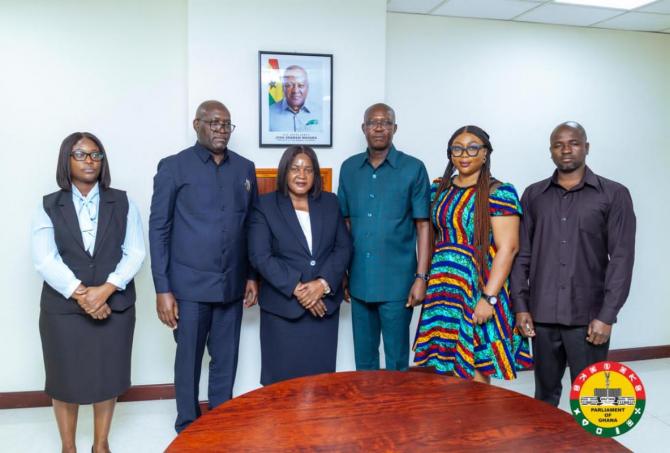
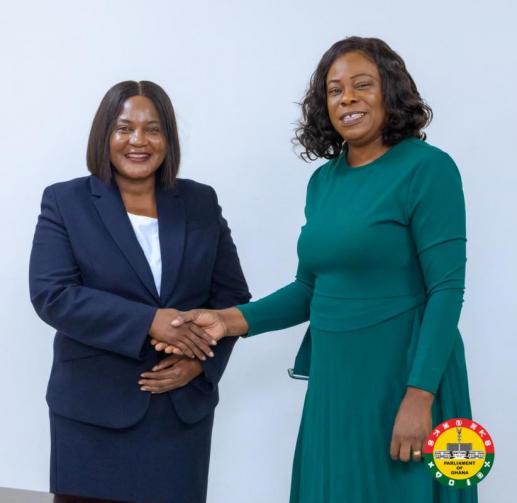
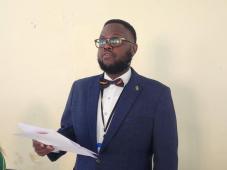
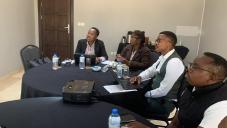
In a significant step toward strengthening inter-parliamentary cooperation, Hon Malungo A Chisangano, MP, First Deputy Speaker of the National Assembly of Zambia and Hon Bernard Ahiafor, MP, First Deputy Speaker of the Parliament of Ghana, held a high-level engagement during an official exchange programme focused on institutional development and legislative excellence.
The interaction, which took place at the Parliament of Ghana was part of a broader parliamentary exchange initiative, that brought together leadership from both legislatures to deliberate on strengthening democratic governance through collaboration, peer learning and the adoption of best practices.
Addressing the session, Hon Ahiafor, MP, underscored the growing importance of parliamentary diplomacy between Parliaments of Ghana and Zambia, noting that modern legislatures must move beyond domestic confines to embrace partnerships that enhance efficiency and accountability. He emphasized that Speakers, who frequently preside over parliamentary proceedings, play a critical role in shaping legislative standards and ensuring continuity in governance.
Hon Chisangano, MP, also echoed similar sentiments, highlighting the value of structured exchanges in addressing common institutional challenges not only between the two Parliaments but across African Parliaments. The discussions focused on key thematic areas, including:
(i). capacity-building for Members of Parliament and parliamentary staff;
(ii). procedural reforms to improve legislative efficiency;
(iii). strategies for inclusive representation, particularly for women, youths and differently abled persons;
(v). budget approval processes;
(iv). structure, composition and functioning of Committee System; and
(iv). the integration of technology in parliamentary processes.
Both leaders acknowledged that while Ghana and Zambia operate within distinct political contexts, they share common democratic aspirations and institutional responsibilities. As such, the exchange provided an opportunity to compare procedural frameworks, examine oversight mechanisms, and identify practical reforms adaptable to each country’s legislative environment.
The deliberations also reflected a broader continental trend toward reinforcing parliamentary networks as vehicles for democratic consolidation. By fostering direct dialogue between Presiding Officers such as Deputy Speakers, Legislatures are increasingly positioning themselves to respond collectively to governance challenges.
The interaction was constructive and forward-looking, marked by mutual respect and a shared commitment to institutional strengthening. The outcomes of the engagement are expected to inform future collaborations between the two Parliaments, including potential joint training programmes and continued knowledge exchange.